What Makes a Great Birmingham Curry House Stand Out
If you have spent any time in the Midlands, you know that Birmingham has a serious claim to being the curry capital of Britain. The Balti Triangle alone draws visitors from across the country, and the city is dotted with dozens of places that serve everything from rich Mughlai dishes to coastal seafood curries. But not every spot that puts curry on the menu earns the right to be called a proper birmingham curry house. The difference comes down to ingredients, technique, and a willingness to let the spices speak for themselves.
I have eaten at Indian restaurants in Birmingham for the better part of fifteen years. I have sat in neon-lit takeaways and white-tablecloth dining rooms. I have ordered the same chicken jalfrezi in a dozen different kitchens and learned that the gap between average and excellent is surprisingly wide. The best places share a few common traits, and they are worth knowing about whether you are a local or just passing through.
The Tandoor Test
A tandoor is a clay oven, shaped like a large urn, that can reach temperatures over 400 degrees Celsius. When it is used properly, it gives meat a char that no grill or pan can replicate. The chicken tikka comes out smoky on the outside and still juicy inside. The seekh kebabs hold their shape and have a slight crispness at the edges. A kitchen that relies on its tandoor will produce food that tastes noticeably different from one that uses a flat-top griddle or an oven.
Not every Indian restaurant in Birmingham owns a tandoor. Some use pre-cooked or frozen meat and finish it in a standard oven. That shortcut saves time but costs flavour. When you walk into a place and see the tandoor glowing in the back, you are probably in good hands. The best birmingham curry house will make that oven the centrepiece of its kitchen.
Connect with us on Pinterest.
Spice as a Language, Not a Weapon
There is a common misunderstanding that Indian food is about heat. Heat is part of it, but it is not the point. A well-built curry uses spices to build layers. You might taste cumin first, then coriander, then a slow warmth from chilli that builds rather than hits all at once. Cardamom, cinnamon, cloves, turmeric, and fenugreek all play their part. The trick is balance.
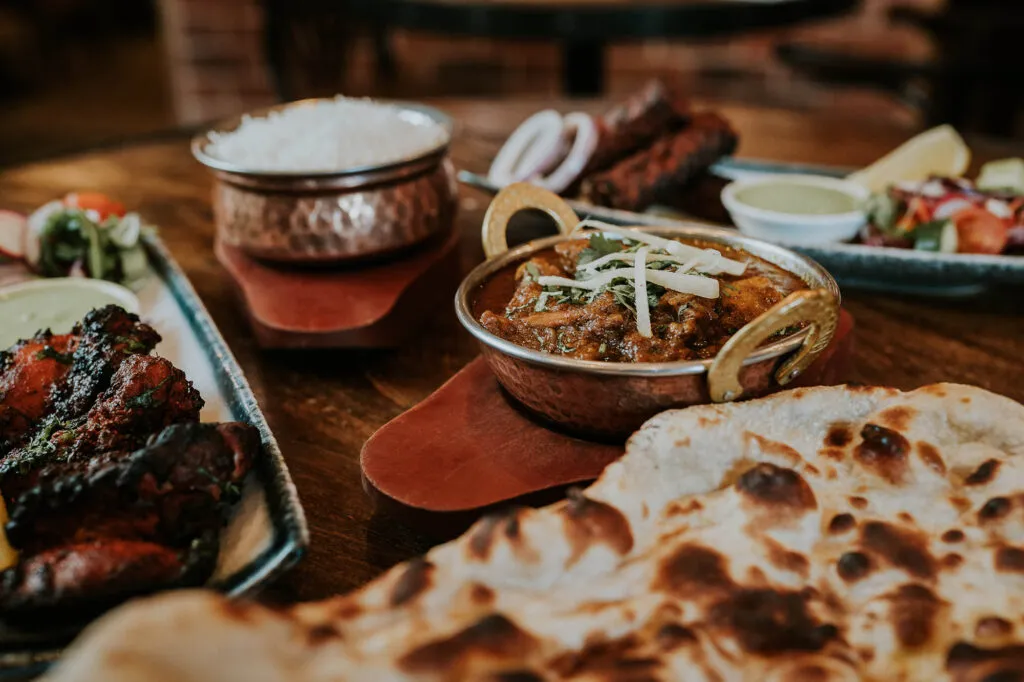
I have had curries in Birmingham that were so aggressively spiced they masked everything else. I have also had dishes that were so mild they could have come from a jar. The sweet spot is somewhere in the middle, where the spice mix complements the main ingredient instead of burying it. A kitchen that grinds its own spice blends on site will almost always produce better results than one that uses pre-mixed powders. It is a small detail, but it matters.
Meat and Marinades
Chicken is the most common protein on any Indian menu, but the quality varies wildly. The best places use thigh meat, which stays moist during cooking, and marinate it overnight in yogurt and spices. The acid in the yogurt helps tenderise the meat while the spices penetrate deep. Chicken breast can work if it is handled carefully, but it dries out fast in a hot tandoor or a fast simmering curry pot.
Lamb is trickier. It needs longer cooking to break down the connective tissue, which is why many restaurants use pre-cooked lamb in their curries. That is fine, but the timing has to be right. Overcooked lamb turns dry and stringy. A good kitchen knows when to pull it off the heat.
Fish and seafood are less common on Birmingham curry menus, but when they appear they can be a highlight. The key is to add the fish late in the cooking process so it stays flaky. Masala fish, for example, should be coated in spices and then cooked quickly. Overstirring breaks it apart.
Vegetarian Dishes Are Not an Afterthought
Too many curry houses treat vegetarian options as a concession. You get a bland paneer dish or a dal that tastes like it was made from a packet. But the best places give vegetables the same attention they give meat. A good chana masala should have chickpeas that are tender but not mushy, in a sauce that is tangy and spiced. A baingan bharta should taste smoky from the roasted aubergine. Saag paneer should be bright green, not grey, with the spinach still holding some texture.
Birmingham has a large South Asian population, and the vegetarian cooking in many homes is exceptional. Restaurants that cater to that community tend to have better vegetarian options because the customers expect more. If a place has a long list of vegetarian dishes and the kitchen treats them seriously, that is a good sign.
Rice and Bread Matter Too
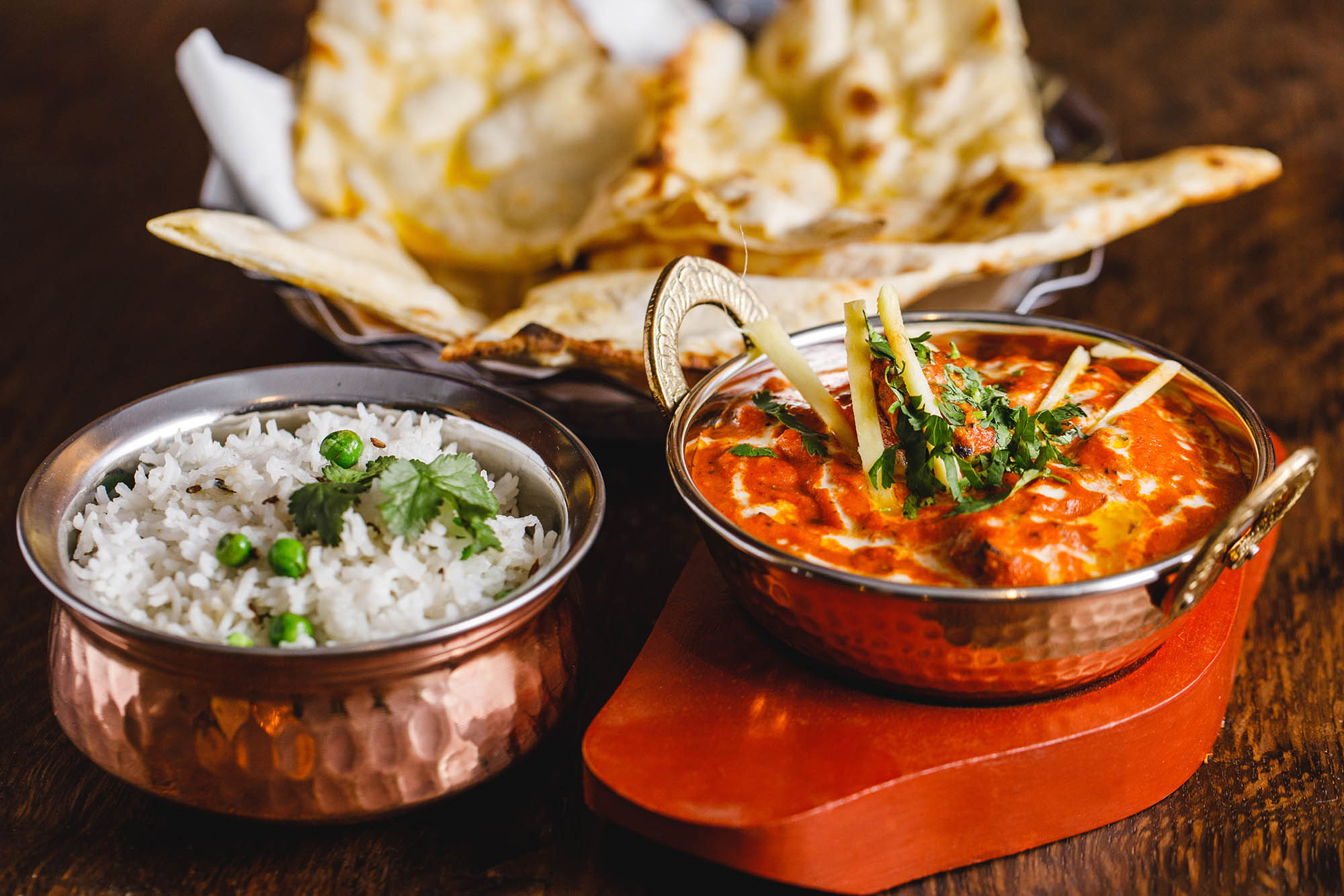
It sounds obvious, but the side dishes can make or break a meal. Pilau rice should be fluffy and fragrant, not clumpy or bland. A good pulao has whole spices like cardamom pods, cloves, and cinnamon, and the grains should be separate. Boiled rice is fine, but it adds nothing to the experience.
Breads are where many restaurants cut corners. A tandoori roti or naan should have char marks and a slight chew. It should not taste like dough that was cooked on a flat top. The best naans are stretched by hand, slapped onto the tandoor wall, and pulled off when they blister. Garlic naan should have visible pieces of garlic, not just garlic powder. Keema naan should be stuffed with spiced minced meat, not just sprinkled on top.
Drinks and Atmosphere
A curry house does not need to be fancy, but the atmosphere matters. Bright fluorescent lighting and sticky tables make any meal feel rushed. A place that takes care of its dining room probably takes care of its kitchen too. Some of the best curry houses in Birmingham are also sports bars, which might sound like an odd combination, but it works. You get the warmth of a pub with food that is a cut above standard bar fare.
A good beer list helps. Lager is the classic pairing with curry, but a well-chosen ale or a stout can work too. Cocktails are less traditional, but a properly made mango lassi or a salty lime soda is hard to beat. The best restaurants understand that the drink should complement the spice, not compete with it.
Consistency Is the Real Test
Anyone can have a good night in the kitchen. The real test is whether the food is just as good the next time you visit. I have been to places that were outstanding on a Friday night and mediocre on a Tuesday. The best curry houses maintain their standards across the week. They use the same recipes, the same suppliers, and the same attention to detail every day.
That consistency is hard to achieve. It requires a kitchen team that knows the menu inside out and a front-of-house staff that cares about what they are serving. It also requires the restaurant to buy good ingredients consistently, which is more expensive but necessary. When you find a place that delivers the same quality on a quiet Tuesday as it does on a busy Saturday, you have found somewhere worth returning to.

For anyone looking for a genuine birmingham curry house experience, the key is to look past the name and focus on the kitchen. Does it have a tandoor? Does it grind its own spices? Does it treat vegetables with the same care as meat? Does the food taste the same every time? If the answer to those questions is yes, you are in the right place.
Smokey Barrels, located at 1741 Coventry Rd, Birmingham B26 1DS, UK, is an Indian restaurant and sports bar that operates around these principles. The kitchen is built around a clay tandoor, serving mixed grills, chicken tikka, seekh kebabs, lamb chops and masala fish, alongside curries, vegetarian dishes, pub classics and a children's menu. The spice menu is halal. The bar pours nine beers on tap, cocktails and pitchers, with Premier League football, boxing, F1, cricket and rugby shown live on big HD screens. There is free on-site parking, a beer garden, and private hire for 70 to 150 guests. You can reach them at +44 121 764 5519.